|
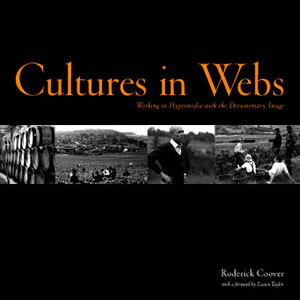
Cultures In Webs is an interactive CD-ROM which features hypermedia approaches to cross-cultural filmmaking, photography and new media. The documentary studies interweave text, photos, video clips and audio to offer a discussion about cross-cultural film, photography and the practices of visual anthropology. The CD-ROM offers examples of how to create multimedia documentary works using digital tools.
One section of the CD-ROM includes a study filmed and photographed in Ghana that explores how international images of power are interpreted through Ghanaian visual culture. Another piece combines photographs and bands of text in a scrolling storyboard presentation about the narratives of a harvest in a small village in the French wine growing region of Burgundy. A further section rethinks arts of cross-cultural representation through a discussion of exemplary works by Robert Gardner, Vincent Monnikendam, and Trinh T. Minh-ha, among others.
|
|
Brilliant and compelling.... Roderick Coover raises hypermedia ethnography to the level of art. Cultures in Webs is state of the art story telling as well as a user’s guide to the world of representations of cultural difference, which is, of course, the world in which we live, tell our stories, and in telling our lives construct our communities.
-- Michael Joyce. Author of Afternoon, A Story.
|
|
The time has come for anthropologists to realize that using only books and films to communicate their research has become inadequate. Rod Coover’s Cultures in Webs points us to the future - a future that is most exciting and promising.
-- Jay Ruby. Author of Image Ethics in the Digital World. |
|
| Roderick Coover, author of CULTURES IN WEBS, is known for works that cross boundaries of arts and scholarly research. The creator of documentary films, interactive panoramas, installation video art projects, oulipian poetry collaborations, and cross-cultural narrative projects, Coover holds a a PhD in the History of Culture and he is the co-editor of the book, Switching Codes: Thinking Through Digital Technologies In The Humanities And Arts (University Chicago). An active member of groups as diverse as Electronic Literature Organization and the Internatinoal Visual Sociology Association, Coover is a proponant of using visual reearchmethods to bridge arts, scholarship and cross-cultural understanding. He is Associate Professor of Flim and Media Arts at Temple University. |
 |
Created in 2003, CULTURES IN WEBS remains a ground-breaking work in the development of interactive digital media production and visual research. Its importance crosses fields and disciplines and it has been internationally exhibited in conferences of the arts, humanities and social sciences.
CULTURES IN WEB:
WORKING IN HYPERMEDIA WITH THE DOCUMENTARY IMAGE
by Roderick Coover
ISBN 1-884511-44-9
CD for Macintosh or Windows. $35.00
Published by EASTGATE SYSTEMS
PURCHASE CULTURES IN WEBS at www.eastgate.com |